Quick Answer
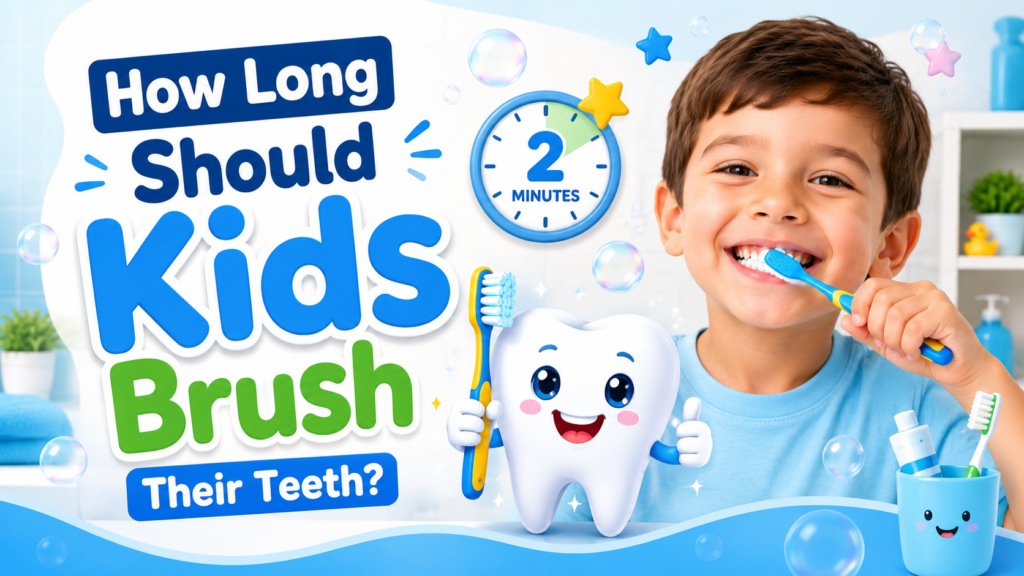
Children should brush their teeth for two full minutes, twice a day — once in the morning and once before bed. Most kids brush for only 30 to 45 seconds, which isn’t long enough to remove plaque from every surface. Until around age 7 or 8, children need an adult to help or supervise, because they don’t yet have the hand coordination to brush effectively on their own.
Introduction
Ask most parents how long their child brushes, and the honest answer is usually “long enough to get toothpaste on the brush.” It’s one of the most common gaps in children’s oral hygiene, and it’s rarely anyone’s fault. Two minutes feels much longer to a six-year-old than it does to an adult.
But brushing time matters more than almost any other habit at home. Plaque doesn’t come off instantly. It needs contact time with the toothbrush and fluoride toothpaste to be disrupted and washed away. A rushed 30-second brush leaves entire sections of the mouth untouched — usually the back molars, where most childhood cavities begin.
This guide walks through how long children should brush at every age, how much toothpaste to use, when to start flossing, and simple ways to make two minutes feel a lot shorter for kids who resist. Whether your family is in Chino, Chino Hills, Eastvale, or a nearby community, these are the habits that protect your child’s smile between dental visits.
Why Two Minutes Is the Standard
Two minutes isn’t an arbitrary number. A child’s mouth has four sections — upper right, upper left, lower right, lower left — and each one needs roughly 30 seconds of attention. Within each section, the brush has to reach three surfaces of every tooth: the outer side, the inner side, and the chewing surface.
Do the math and two minutes is barely enough. When a child brushes for 40 seconds, they aren’t brushing all their teeth quickly — they’re skipping most of them entirely. The teeth that get missed are almost always the same ones: the back molars, the inside surfaces of the lower front teeth, and the gumline.
Fluoride also needs time to work. Toothpaste doesn’t just scrub away plaque; the fluoride in it strengthens enamel and helps reverse the very earliest stages of tooth decay. That process depends on the toothpaste staying in contact with the teeth long enough to matter.
How Long Should Kids Brush at Each Age?
The two-minute guideline stays the same as children grow. What changes is how much help they need and how much toothpaste they use.
Before the First Tooth
Even before teeth appear, wipe your baby’s gums gently with a clean, damp washcloth or gauze pad once or twice a day. This removes milk residue and gets your child used to having their mouth cleaned — which makes the transition to a toothbrush far easier later on.
Ages 0 to 3: Parent Does the Brushing
As soon as the first tooth appears, start brushing twice a day with a soft infant toothbrush and a smear of fluoride toothpaste about the size of a grain of rice. At this age you are doing the brushing, not your child. Aim for two minutes, but don’t turn it into a battle — consistency matters more than perfection in the beginning.
Ages 3 to 6: Child Tries, Parent Finishes
Let your child brush first so they build independence and confidence. Then take the brush and go over everything yourself, especially the back teeth. Move up to a pea-sized amount of fluoride toothpaste and teach your child to spit it out rather than swallow it. Still two minutes, twice a day.
Ages 6 to 8: Supervise Closely
Most children don’t develop the fine motor skills for truly effective brushing until around age 7 or 8 — roughly the same time they can tie their own shoelaces reliably. Stay in the bathroom, watch the clock, and spot-check the molars afterward. This is also when the first permanent molars come in, and those teeth are especially cavity-prone.
Ages 9 and Up: Independence With Check-Ins
By this point most children can brush on their own. Keep a timer in the bathroom, and check in every so often — especially if your child wears braces or other orthodontic appliances, which trap food and require extra time and care.
Technique Matters More Than Pressure
Many children think brushing harder means brushing better. It doesn’t. Scrubbing aggressively can irritate the gums and, over time, wear away enamel near the gumline. Plaque is soft — it lifts off with gentle, thorough contact, not force.
Teach your child to:
- Hold the brush at a slight angle toward the gumline
- Use small circles or short back-and-forth strokes
- Use light pressure — enough to feel the bristles, not enough to flatten them
- Brush the outer surfaces, then the inner surfaces, then the chewing surfaces
- Give the tongue a gentle brush at the end
If the bristles on your child’s toothbrush look flattened or splayed after a few weeks, that’s a sign they’re pressing too hard.
How to Make Two Minutes Feel Shorter
The goal isn’t to force your child through two minutes — it’s to make two minutes pass without them noticing. A few approaches that work well:
- Play a two-minute song. Let your child pick it. The song ends when brushing ends.
- Use a sand timer. Kids respond to something visual far better than a countdown they can’t see.
- Split the mouth into four quadrants. Thirty seconds each, counted out loud, turns brushing into a game with a finish line.
- Brush together. Children copy what they see. Brushing alongside your child is one of the most effective habits you can build.
- Try an electric toothbrush with a built-in timer. Many pulse every 30 seconds to signal it’s time to move to the next section.
- Let them choose the toothbrush. A brush they picked out is a brush they’ll actually use.
Resistance at brushing time is normal, especially with toddlers. Staying calm and consistent works far better than pressure. Children who associate brushing with stress tend to fight it longer.
Choosing the Right Toothbrush
The right brush makes two minutes easier. Look for:
- Soft bristles. Always soft — never medium or hard, at any age.
- A small head. It needs to reach the back molars comfortably.
- A chunky, easy-grip handle. Small hands need something they can actually hold.
- An age-appropriate size. Toothbrushes are labeled by age range for good reason.
Replace the toothbrush every three to four months, or sooner if the bristles start to fray. A worn brush simply doesn’t clean well, no matter how long your child brushes. It’s also worth replacing a toothbrush after your child has been sick.
Electric and manual toothbrushes both work well when used properly. Electric brushes can be helpful for children who rush, who struggle with technique, or who wear braces — but a manual brush used carefully for two minutes is perfectly effective.
How Much Toothpaste Should Kids Use?
More toothpaste doesn’t mean cleaner teeth. The amount depends on your child’s age:
- Under age 3: a smear about the size of a grain of rice
- Ages 3 to 6: a pea-sized amount
- Age 6 and older: a pea-sized amount, with the child spitting out thoroughly
Use fluoride toothpaste from the very first tooth. Fluoride is one of the most effective tools available for preventing cavities in children, and the small amounts above are considered appropriate even for children who swallow a little.
Teach your child to spit out the toothpaste rather than rinse heavily with water afterward. Rinsing washes the fluoride away before it has finished working. A small spit and nothing more is ideal. If you have questions about fluoride specifically, your child’s dentist can review what’s appropriate for their age and cavity risk during a preventive care visit.
When Should Kids Brush — Before or After Breakfast?
Either works, and consistency matters more than timing. Brushing before breakfast removes the plaque that built up overnight and coats the teeth with fluoride before food arrives. Brushing after breakfast clears away food debris.
One caution: if your child has eaten something acidic, such as orange juice or citrus fruit, wait about 30 minutes before brushing. Acid temporarily softens enamel, and brushing immediately afterward can wear it down. Rinsing with water in the meantime helps.
The nighttime brush is the one that matters most. Saliva flow drops while your child sleeps, and saliva is the mouth’s natural defense against decay. Anything left on the teeth at bedtime sits there for hours. Nothing to eat or drink except water after brushing at night.
When Should Kids Start Flossing?
As soon as two teeth touch each other, a toothbrush can no longer reach between them. For many children this happens between ages 2 and 6, often starting with the back molars.
Floss picks are usually easier than string floss for small hands, and there’s no downside to using them. Parents typically need to floss for their child until around age 8 to 10. It only takes a minute, but it protects the surfaces where cavities most often form and where they’re hardest to spot.
Common Brushing Mistakes Parents Miss
- Skipping the back molars. They’re the hardest to reach and the most cavity-prone. Most missed spots are back here.
- Brushing only the outer surfaces. The inside surfaces — especially behind the lower front teeth — collect plaque quickly.
- Handing over full independence too early. A confident five-year-old is still not an effective brusher.
- Rinsing heavily afterward. This washes away the fluoride before it can strengthen enamel.
- Using a worn-out toothbrush. Frayed bristles don’t clean, regardless of effort.
- Letting toddlers fall asleep with a bottle. Milk or juice pooling around the teeth overnight is a leading cause of early childhood cavities.
Even excellent brushing doesn’t replace professional care. Plaque that hardens into tartar can’t be removed with a toothbrush at home, and early cavities are often invisible to parents. That’s why routine dental exams and cleanings every six months remain an important part of the picture.
Common Myths About Brushing
Myth: Baby teeth don’t matter because they fall out anyway.
Fact: Baby teeth guide the permanent teeth into position, support speech development, and allow normal chewing. Losing one early can cause spacing problems later.
Myth: Brushing harder cleans better.
Fact: Gentle, thorough brushing removes plaque effectively. Hard scrubbing can damage gums and enamel.
Myth: If my child brushes, they don’t need to floss.
Fact: A toothbrush can’t reach between teeth that touch. Flossing cleans surfaces brushing simply cannot.
Myth: Kids can brush on their own by age 4 or 5.
Fact: Most children need help or close supervision until about age 7 or 8.
Myth: Sugar-free snacks can’t cause cavities.
Fact: Starchy foods like crackers and chips break down into sugars in the mouth and can still feed cavity-causing bacteria.
Frequently Asked Questions
How long should kids brush their teeth?
Two minutes, twice a day — morning and before bed. That’s roughly 30 seconds for each of the four sections of the mouth.
At what age can my child brush their own teeth?
Most children can brush independently around age 7 or 8, once their fine motor skills have developed. Before that, they should be helped or closely supervised, even if they want to do it themselves.
How much toothpaste should my child use?
A rice-grain smear of fluoride toothpaste under age 3, and a pea-sized amount from age 3 onward. More than that doesn’t clean better.
What if my child refuses to brush?
Resistance is very common with toddlers. Try letting them choose their toothbrush, brushing alongside them, using a two-minute song, or making it part of a predictable bedtime routine. Staying calm works better than force — children who associate brushing with conflict tend to resist it longer.
Should my child brush before or after breakfast?
Either is fine. If your child eats something acidic like citrus or juice, wait about 30 minutes before brushing so the enamel can re-harden.
Is an electric toothbrush better for kids?
Not necessarily better, but often easier. Electric brushes with built-in timers help children who rush, and they can be useful for kids with braces. A manual brush used properly for two minutes is equally effective.
How often should I replace my child’s toothbrush?
Every three to four months, or sooner if the bristles look frayed or flattened. Replace it after your child has been sick, too.
When should my child start flossing?
As soon as two teeth touch, since a toothbrush can’t clean between them. Most children need a parent to floss for them until around age 8 to 10.
Does my child need to brush their tongue?
A gentle brush of the tongue at the end helps remove bacteria and freshens breath. It only takes a few seconds.
Should my child rinse with water after brushing?
Spitting is better than rinsing. Rinsing with a lot of water washes the fluoride away before it has finished strengthening the enamel.
My child brushes twice a day — why do they still get cavities?
Brushing time, technique, diet, snacking frequency, and the natural depth of the grooves in the molars all play a role. Frequent snacking or sipping sweet drinks throughout the day keeps the mouth in an acidic state even in children who brush well. A pediatric dentist can identify what’s driving it and may recommend sealants or fluoride treatments.
When should my child first see a dentist?
By age 1, or within six months of the first tooth appearing. Early visits establish a dental home and help catch small problems before they grow. You can read more in our guide on when your child should first visit a pediatric dentist.
Final Thoughts
Two minutes, twice a day, with a soft brush and the right amount of fluoride toothpaste. It sounds simple, and it is — but the details matter. The back molars need attention. Gentle beats hard. And children need more help, for longer, than most parents expect.
The habits your child builds now tend to stay with them. A child who learns to brush thoroughly at six is far more likely to keep doing it at sixteen. Progress matters more than perfection — a few rough nights won’t undo months of good routine.
If you’re unsure whether your child is brushing well enough, or you’d like guidance tailored to their age and cavity risk, a pediatric dental evaluation can help. Our team is always happy to walk families through brushing technique in person. You can request an appointment with our Chino pediatric dental team whenever it’s convenient for you.
