Quick Answer
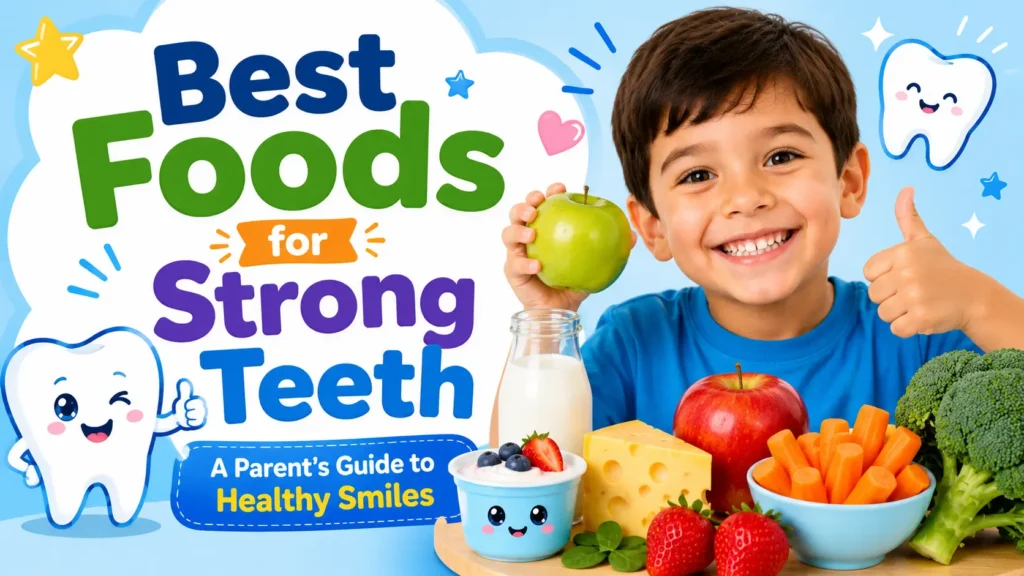
The best foods for strong teeth are those rich in calcium, phosphorus, and vitamin D — cheese, plain yogurt, milk, eggs, leafy greens, nuts, and fish. These nutrients help rebuild enamel and support healthy jaw development. Crunchy fruits and vegetables like apples, carrots, and celery help clean teeth naturally and boost saliva flow. Water is the single best drink for a child’s teeth.
Introduction
Most parents already know that candy isn’t great for teeth. What surprises them is which “healthy” snacks are quietly doing damage — and how much the timing of eating matters compared to what’s actually on the plate.
A child who eats a cookie with dinner is in far better shape than a child who grazes on crackers all afternoon. Same sugar. Very different outcome.
Food doesn’t just avoid harming teeth — the right foods actively make enamel stronger. Understanding both sides of that equation gives you a lot more control than a simple “less sugar” rule ever could.
This guide covers the foods that genuinely strengthen your child’s teeth, the everyday snacks that catch parents off guard, and the one habit change that makes the biggest difference of all.
Why How Often Your Child Eats Matters More Than What They Eat
This is the part most parents never hear, and it changes everything.
Every time your child eats or drinks something other than water, the bacteria in their mouth produce acid. That acid softens enamel for roughly 20 to 30 minutes. Saliva then goes to work, washing the acid away and re-hardening the enamel. This is a normal, healthy cycle — the mouth is built for it.
The problem is what happens when the cycle never gets to finish.
A child who sips juice throughout the morning or nibbles crackers over two hours restarts the acid clock again and again. Their enamel never gets the recovery window it needs. The mouth stays in an acidic state for hours at a stretch, and that’s when cavities form.
The takeaway is simple: fewer eating occasions beat smaller portions. A child who has three meals and two set snacks is far better protected than a child who grazes all day — even if the grazing child is eating “healthier” food.
The Best Foods for Strong Teeth
Calcium-Rich Foods
Calcium is the primary building block of enamel and bone. Good sources for kids include:
- Cheese
- Plain yogurt
- Milk
- Leafy greens like spinach and kale
- Almonds
- Fortified plant milks
Cheese deserves a special mention. It’s high in calcium, it raises the pH in the mouth (making it less acidic), and it stimulates saliva. A small piece of cheese after a meal is one of the most tooth-friendly snacks there is.
Phosphorus-Rich Foods
Phosphorus works alongside calcium to rebuild enamel. Neither mineral does its best work alone. Look for:
- Eggs
- Fish such as salmon and sardines
- Lean meats and poultry
- Nuts and seeds
- Beans and lentils
Vitamin D
Vitamin D is what allows the body to actually absorb the calcium it takes in. Without it, calcium-rich foods deliver far less benefit. Sources include fatty fish, egg yolks, fortified milk, and sunlight.
Crunchy Fruits and Vegetables
Apples, carrots, celery, and cucumbers act almost like a natural toothbrush. Their texture scrubs the tooth surface as your child chews, and the chewing itself produces saliva — the mouth’s own defense system.
They’re not a replacement for brushing. But as an after-school snack, they’re hard to beat.
Water
Water is the best drink for teeth, full stop. It rinses away food particles, dilutes acid, and keeps saliva flowing. Most tap water in California is fluoridated, which adds another layer of cavity protection.
Make water the default between meals. Everything else becomes the exception.
The “Healthy” Snacks That Surprise Parents
These foods have good reputations and cause real problems:
- Crackers, pretzels, and chips. Starch breaks down into sugar in the mouth, and these foods get packed into the grooves of the molars, where they sit for hours.
- Dried fruit. Raisins, fruit leather, and dried mango are concentrated sugar with a sticky texture that clings to teeth. Fresh fruit is a much better choice.
- Fruit pouches. Convenient, but they encourage slow sipping — which means a long, continuous acid exposure.
- Gummy vitamins. Sticky, sugary, and often taken right before bed. If your child uses them, follow with water and brushing.
- Juice — even 100% juice. It’s still concentrated sugar with acid. Whole fruit is better; if you serve juice, keep it to mealtimes.
- Sports and flavored drinks. Highly acidic, and often sipped slowly over an entire practice or game.
- Granola bars. Frequently as sugary as candy bars, with a sticky texture that lingers.
None of these need to be banned. The fix is usually about when and how they’re eaten rather than eliminating them altogether.
Simple Snack Swaps
| Instead of | Try |
|---|---|
| Fruit snacks or gummies | Fresh apple or pear slices |
| Crackers or chips | Cheese cubes or plain yogurt |
| Juice box | Water, or milk with a meal |
| Granola bar | A handful of almonds |
| Dried fruit | Fresh berries |
| Sports drink | Water |
Small swaps, repeated daily, add up to far more protection than the occasional birthday party takes away.
What About Sugar-Free Snacks?
“Sugar-free” isn’t automatically safe. Starchy sugar-free crackers still break down into sugars in the mouth. And many sugar-free drinks — including sparkling waters and diet sodas — are acidic enough to erode enamel on their own, regardless of sugar content.
One genuine exception: sugar-free gum sweetened with xylitol. For older children who can chew gum safely, it increases saliva flow and helps neutralize acid after meals. It’s a useful tool, not a substitute for brushing.
Building a Tooth-Friendly Routine
You don’t need to overhaul your family’s diet. A few small structural changes do most of the work:
- Set snack times instead of allowing grazing. Two defined snacks beat all-day nibbling.
- Make water the default drink. Save milk and juice for mealtimes.
- Serve sweets with meals, not between them. More saliva is flowing during a meal, so the acid attack is buffered.
- Finish meals with cheese, plain yogurt, or a crunchy vegetable. It helps neutralize acid.
- Nothing but water after brushing at night. Saliva flow drops during sleep, so anything left on the teeth stays there.
- Rinse with water after acidic foods, and wait about 30 minutes before brushing so enamel can re-harden.
Diet and brushing work together. If you’d like a refresher on the brushing half of the equation, our guide on how long kids should brush their teeth covers technique, timing, and toothpaste amounts by age.
Common Myths About Food and Teeth
Myth: Only sugar causes cavities.
Fact: Starches like crackers, bread, and chips break down into sugars in the mouth and feed the same cavity-causing bacteria.
Myth: If my child brushes well, diet doesn’t matter much.
Fact: Brushing removes plaque, but it can’t undo an all-day acid attack from constant snacking and sipping.
Myth: Fruit juice is a healthy substitute for whole fruit.
Fact: Juice removes the fiber and concentrates the sugar. Whole fruit is significantly better for teeth.
Myth: Baby teeth don’t matter, so diet is less important early on.
Fact: Baby teeth hold space for permanent teeth. Early cavities can lead to infection, early tooth loss, and spacing problems later.
Myth: Sugar-free means tooth-safe.
Fact: Many sugar-free foods and drinks are still acidic or starchy enough to harm enamel.
Frequently Asked Questions
What are the best foods for strong teeth in kids?
Cheese, plain yogurt, milk, eggs, leafy greens, nuts, fish, and crunchy fruits and vegetables. These provide the calcium, phosphorus, and vitamin D that enamel depends on.
Which foods cause the most cavities in children?
Sticky and starchy foods that linger on teeth — dried fruit, gummies, crackers, chips, and granola bars — along with anything sipped slowly over a long period, like juice or sports drinks.
Is cheese really good for teeth?
Yes. Cheese is high in calcium, raises the pH in the mouth, and stimulates saliva. It’s one of the better snacks for teeth, especially right after a meal.
Does milk cause cavities?
Milk with meals is fine and provides valuable calcium. The problem is prolonged exposure — such as a bottle or sippy cup of milk at bedtime, which lets sugars pool around the teeth overnight.
Is fruit bad for my child’s teeth?
Whole fresh fruit is a good choice. The fiber and water content help, and chewing stimulates saliva. Dried fruit and juice are the ones to limit.
Are fruit pouches bad for teeth?
They can be. The sugar itself is a concern, but the bigger issue is that pouches encourage slow sipping, which extends the acid attack. Serve them at mealtimes rather than as an all-afternoon snack.
How many snacks should my child have per day?
Two defined snacks between meals is a reasonable target for most children. Fewer eating occasions gives enamel time to recover.
Does drinking water actually protect teeth?
Yes. It rinses away food particles, dilutes acid, and supports saliva production. Fluoridated tap water adds further cavity protection.
Can a good diet reverse a cavity?
Very early enamel demineralization can sometimes be remineralized with fluoride and improved habits. Once a cavity has broken through the enamel, it needs professional treatment. A dentist can tell you which stage your child is at.
Should I let my child have candy at all?
Occasional treats are fine. Timing matters more than the treat itself — served with a meal and followed by water, candy does far less harm than the same candy eaten slowly between meals.
My child eats well but still gets cavities. Why?
Grooves in the molars, snacking frequency, brushing technique, saliva flow, and genetics all play a role. A pediatric dentist can identify the specific cause and may recommend sealants or fluoride treatments.
What drinks are safe between meals?
Water is the only drink that’s genuinely safe for teeth between meals. Everything else — including milk, juice, and flavored water — is best kept to mealtimes.
Final Thoughts
The foods that build strong teeth aren’t complicated: cheese, yogurt, eggs, nuts, leafy greens, crunchy fruits and vegetables, and plenty of water. What matters just as much is the rhythm of the day — three meals, two snacks, and water in between.
You don’t need a perfect diet. You need a predictable one. Enamel is remarkably good at repairing itself, as long as you give it the quiet stretches it needs to do the work.
If you have questions about your child’s diet, cavity risk, or whether preventive treatments like sealants or fluoride would help, a preventive dental evaluation can give you clear answers. Our team sees families throughout Chino, Chino Hills, and the surrounding communities, and we’re always glad to talk through what’s realistic for your household. You can request an appointment whenever it suits you.
