Early and comprehensive orthodontics in Chino, CA

Phase I & Phase II Orthodontics for Kids & Teens

Some children benefit from a short course of orthodontic treatment while the jaw is still growing. Most do not, and are better served by waiting until the permanent teeth are through. This page explains the difference between the two phases honestly — including why two-phase treatment is the exception rather than the rule.

Phase I and Phase II orthodontics explained

Phase I orthodontics is early, limited treatment between roughly ages six and ten, while baby and permanent teeth are both present, used to guide jaw growth or correct a specific problem such as a crossbite. Phase II is comprehensive treatment in the teens once permanent teeth have erupted. Most children need only Phase II. Two-phase treatment is recommended only where early intervention changes the eventual outcome.
Understanding Two-Phase Treatment

The two phases do different jobs. Phase I changes how the jaw grows; Phase II moves teeth into final position. One is not a shorter version of the other.

Early / interceptive

Phase I

Typical age

About 6 to 10 years old

Which teeth are present

A mix of baby and permanent teeth

What it is for

Guiding jaw growth and correcting a specific problem while growth can still be influenced

Common treatments

Palatal expander, partial braces on a few teeth, space maintainer, habit appliance

How long it runs

Often 6 to 12 months, then a resting period while remaining teeth erupt

What it achieves

Creates room, corrects a crossbite, reduces the risk of trauma to protruding teeth

How often it is needed

A minority of children — only where waiting would make the outcome worse

Comprehensive

Phase II

Typical age

About 11 to 14 years old, sometimes later

Which teeth are present

Nearly all permanent teeth have erupted

What it is for

Aligning all the teeth and settling the bite into its final position

Common treatments

Full braces or a complete series of clear aligners, followed by retainers

How long it runs

Commonly 12 to 30 months depending on the case

What it achieves

A finished, aligned bite

How often it is needed

The standard route for most children who need orthodontics

Worth being clear about: Phase I is not a head start on Phase II, and completing it does not mean braces are avoided later. Its purpose is to fix something that is genuinely easier to correct while the jaw is growing. Where there is no such problem, starting early adds cost and years in appliances without improving the result. A good evaluation is as ready to recommend waiting as it is to recommend treating.

Is My Child Ready for an Evaluation?

Two routes in. Neither tells you whether treatment is needed — only whether it is worth having your child looked at now.

The early route

Roughly ages 6–10

Is your child between six and ten?

Are baby teeth and permanent teeth both present?

Is there crowding, a crossbite, or upper teeth that stick out noticeably?

Has a thumb or pacifier habit continued past about age four?

Yes to any of these → worth a Phase I evaluation

The comprehensive route

Roughly ages 11–14

Is your child eleven or older?

Have most permanent teeth come through?

Is there crowding, spacing, or a bite that does not meet evenly?

Did your child have Phase I treatment earlier?

Yes to any of these → worth a Phase II evaluation

These questions point toward an appointment, not a diagnosis. Crowding at seven often resolves as the jaw widens, and a bite that looks wrong to a parent can be entirely normal for that stage. Only a clinical examination, usually with imaging, can establish which phase — if either — your child actually needs. The American Association of Orthodontists suggests a first evaluation by age seven, and for most children that visit ends with a plan to simply keep watching.
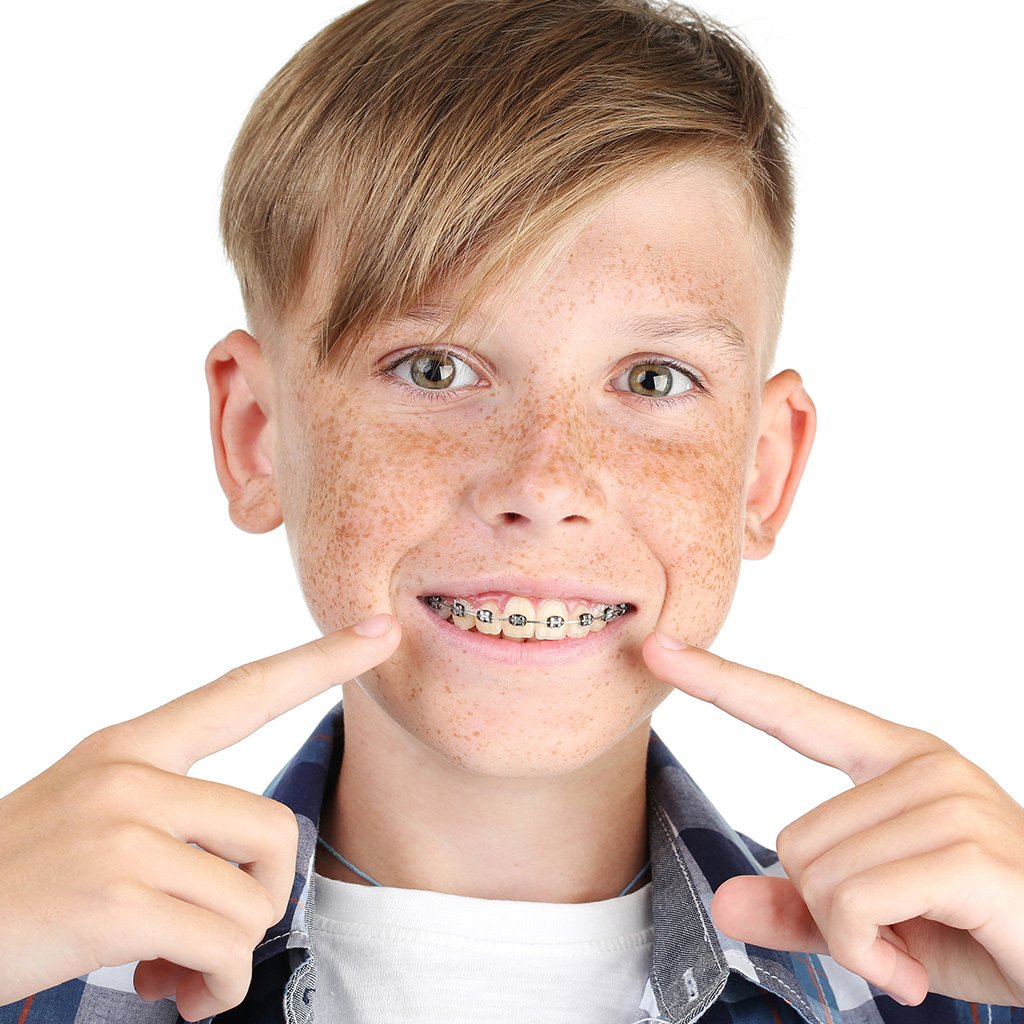
What an Early Evaluation Looks For

Six of the things an orthodontist checks around age seven. Finding one does not mean treatment starts immediately — several are simply monitored as the jaw grows.

Crossbite

Upper teeth sitting inside the lower ones when biting together, on one side or across the front. This is the classic reason to treat early, because a widening appliance works far more easily while the palate is still growing.

Deep or increased overbite

Upper front teeth covering too much of the lower ones, or sitting well forward of them. Teeth that protrude noticeably are considerably more likely to be chipped or knocked in a fall, which is a genuine reason to act rather than a cosmetic one.

Underbite

Lower teeth closing ahead of the upper ones. Often related to how the jaws are growing relative to each other, so timing matters more here than in almost any other case.

Crowding

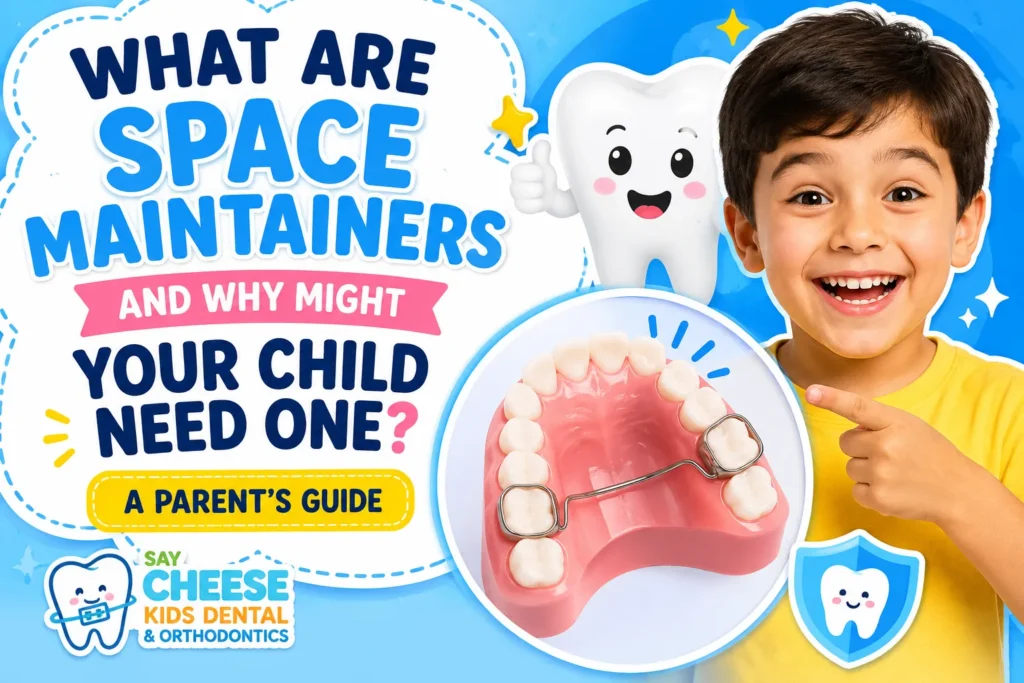
Not enough room for teeth to come through in line. Mild crowding at seven often eases as the arch widens; significant crowding may benefit from creating space early. See space maintainers where a baby tooth was lost early.

Spacing and missing teeth

Gaps can be normal at this age. What matters is whether a permanent tooth is missing altogether or blocked, which digital X-rays will show.

Jaw growth and habits

How the upper and lower jaws are developing relative to each other, plus habits like prolonged thumb sucking or mouth breathing that can shape the growing jaw.

Each of these is assessed at a consultation alongside imaging. Where treatment is warranted, the options are explained in full — see braces and orthodontics or clear aligners.

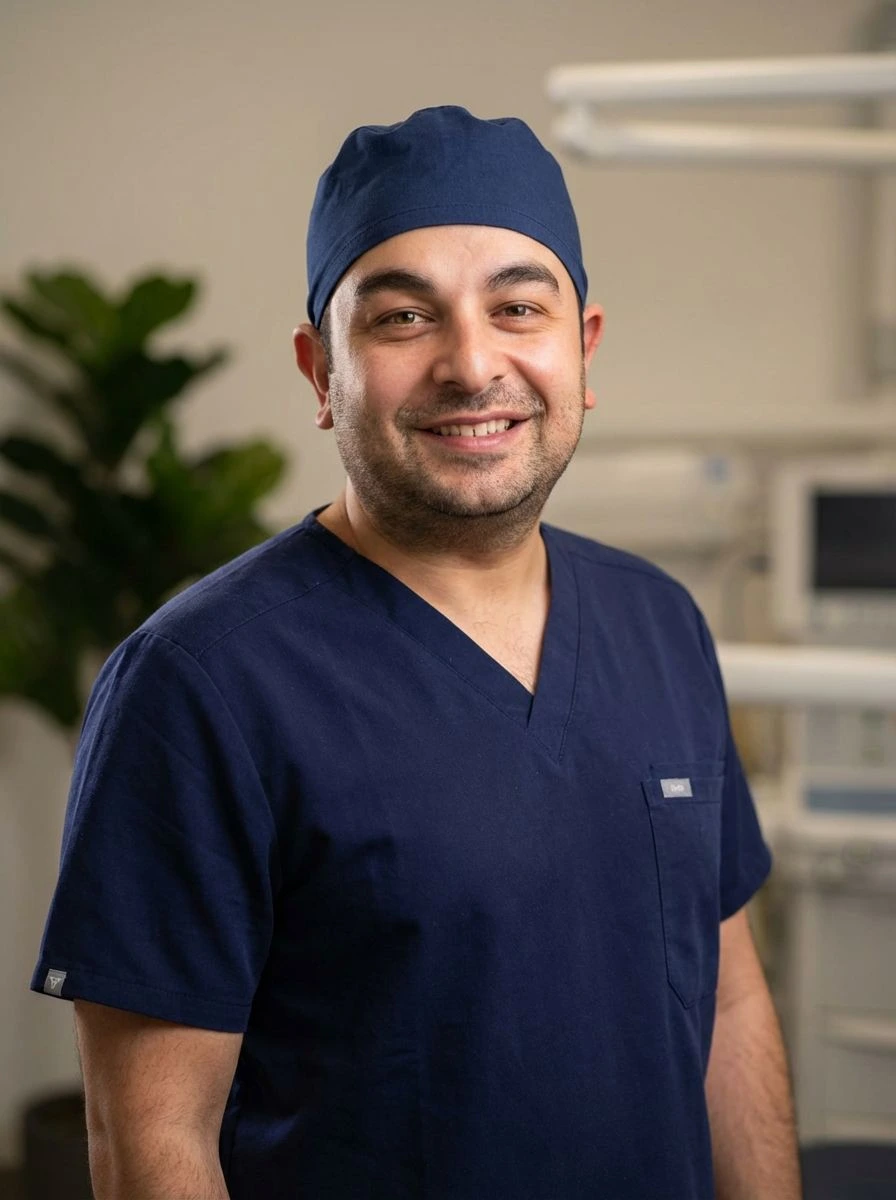
joshua kohan kid dentist in chino

Meet Our Doctor

Dr. Joshua Kohan

Dr. Kohan has over five years of experience creating healthy, confident smiles for children in Chino. His gentle, child-focused approach makes every visit positive and stress-free.

UCLA & D.M.D. Trained

Child-Focused Care

Gentle, Child-Focused Care

5+ Years Experience

Frequently Asked Questions About Two-Phase Orthodontics

Early, limited treatment usually between ages six and ten, while baby and permanent teeth are both present. It targets one specific problem — most often a crossbite, severe crowding, or protruding upper teeth — using an expander, partial braces, or a habit appliance. It typically runs six to twelve months.

Comprehensive treatment once nearly all permanent teeth are through, usually starting between eleven and fourteen. This is full braces or a complete aligner series that aligns every tooth and settles the bite, followed by retainers.

No, and this matters. Most children who need orthodontics need only one course of comprehensive treatment in their teens. Two-phase treatment is appropriate for a minority, where waiting would make the eventual result worse or a surgical option more likely.

The American Association of Orthodontists recommends an evaluation by age seven. For most children that appointment concludes with monitoring rather than treatment, which is a useful outcome in itself.

It can make Phase II shorter or simpler in some cases, and occasionally avoids extractions or surgery. It does not usually eliminate the need for braces later. Any practice suggesting early treatment will prevent braces entirely is overstating it.

No. Clear aligners are an option for many suitable cases — see clear aligners. Complex movements remain more predictable with fixed braces, and the choice is made case by case.

Rarely in Phase I, because there is no stable set of teeth to plan against while baby teeth are still being lost. Early treatment usually uses appliances or partial braces instead. Aligners become a genuine option in the teens.

Many PPO plans carry an orthodontic lifetime maximum rather than an annual one, which means Phase I and Phase II draw on the same pot. That is worth understanding before starting early treatment. We will check your specific plan.

Phase I commonly runs six to twelve months, followed by a resting period of a few years while the remaining permanent teeth erupt. Phase II typically runs twelve to thirty months. Your child’s own timeline is estimated after examination and records.

Only a clinical evaluation with imaging can tell you. Age alone does not decide it, and neither does how the teeth look to a parent. The evaluation is free, and if the answer is that nothing needs doing yet, that is what we will say.

Reviewed by Dr. Joshua Kohan, DMD — Say Cheese Kids Dental & Orthodontics, Chino, CA. Orthodontic treatment is provided in coordination with our partner orthodontists.
Last reviewed: 6 August 2026. Treatment recommendations are made only after an individual orthodontic evaluation. This page is general information and not a substitute for being seen.

What Parents Are Saying

Don’t just take our word for it – hear from the families we’ve had the privilege to serve
  • Very clean office the staff was amazing. So many neat video games. I would refer Say Cheese Dental to my friends and family.

    Priscilla marie Vargas Avatar Priscilla marie Vargas
    July 10, 2026

    The dentist was very kind and knowledgeable and polite! The staff took the time needed for my 3 boys to feel comfortable and relaxed. We will be here in the next 6.months for there followup and braces!

    Brigette Navarro Avatar Brigette Navarro
    July 9, 2026

    Me encanto el trato del personal todos incluyendo al doctor

    Lurdes Urtis Avatar Lurdes Urtis
    July 9, 2026
  • Muy amable todo el personal y atentos, respondieron todas mis dudas. Fue una buena opción venir aquí.

    Monica Mendoza Avatar Monica Mendoza
    July 6, 2026

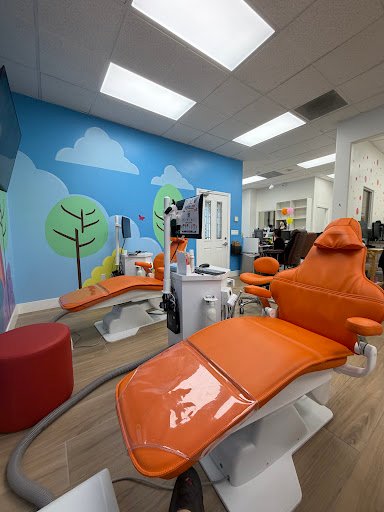
    This was my first visit to Say Cheese Dental, and I was really impressed. The place is super clean, organized, and has a relaxing atmosphere. The staff is kind, patient, and very friendly — they made me feel comfortable from the moment I walked in. I’m happy I chose this office!

    LOURDES HERRERA Avatar LOURDES HERRERA
    July 6, 2026

    The staff are Great and explain everything perfectly, they are willing to work on monthly payments with you and they are patiently with you 🙂 would recommend coming by and check them out 🙂

    media thumbnail 0
    Ivette Lopez Avatar Ivette Lopez
    July 3, 2026
  • Great consultation! The staff was friendly, the orthodontist was knowledgeable and took the time to explain everything clearly. I felt comfortable and confident with the treatment plan. Highly recommend! I will definitely be back!

    Natasha Harris Avatar Natasha Harris
    July 3, 2026

    First time coming to this kids dental and we had a great experience. Everything was explained so well , will be coming back!

    Karen Romero Avatar Karen Romero
    June 25, 2026

    We loved it, all very friendly, very professional. The place is very nice, very cozy, tidy and clean, there is parking and easy to get to.

    media thumbnail 0
    Paulina Maldonado Avatar Paulina Maldonado
    June 25, 2026

We Accept Medi-Cal (Denti-Cal) & PPO Dental Insurance for Kids

A first dental visit should not be a financial decision. We accept Medi-Cal (Denti-Cal) and most major PPO plans, and our front desk verifies your coverage before you come in, so you know what is covered ahead of the appointment.

Serving families in Chino, Chino Hills, Eastvale and Ontario

Our office

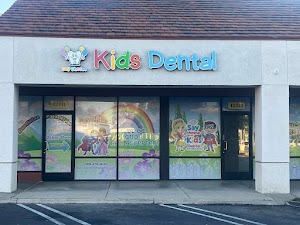
12413 Central Ave, Chino, CA 91710
Open in Google Maps →

Office hours

Monday to Thursday, 8:00 AM – 5:00 PM
Friday, 8:00 AM – 2:00 PM
Saturday and Sunday, closed

Call the office

(909) 479-6030

Families travel to us from

We are on Central Avenue in Chino, a short drive from most of the surrounding communities. Siblings can usually be booked back to back, which saves a second trip.

ChinoChino HillsEastvaleOntarioNorcoDiamond BarPomonaUplandCoronaMira LomaWalnutAnaheim Hills

Related Services

Other pages Chino parents often read alongside this one.

Supporting Healthy Smiles Through Every Stage of Growth

Whether your child may benefit from early treatment or is ready for comprehensive care, an evaluation will tell you where they stand — including if the answer is simply to wait and watch. Consultations are free. Families come to us from Chino, Chino Hills, Eastvale, and Ontario.