
Medically reviewed by Dr. Joshua Kohan, DMD — pediatric dentist, Say Cheese Kids Dental & Orthodontics, Chino, CA
Quick Answer
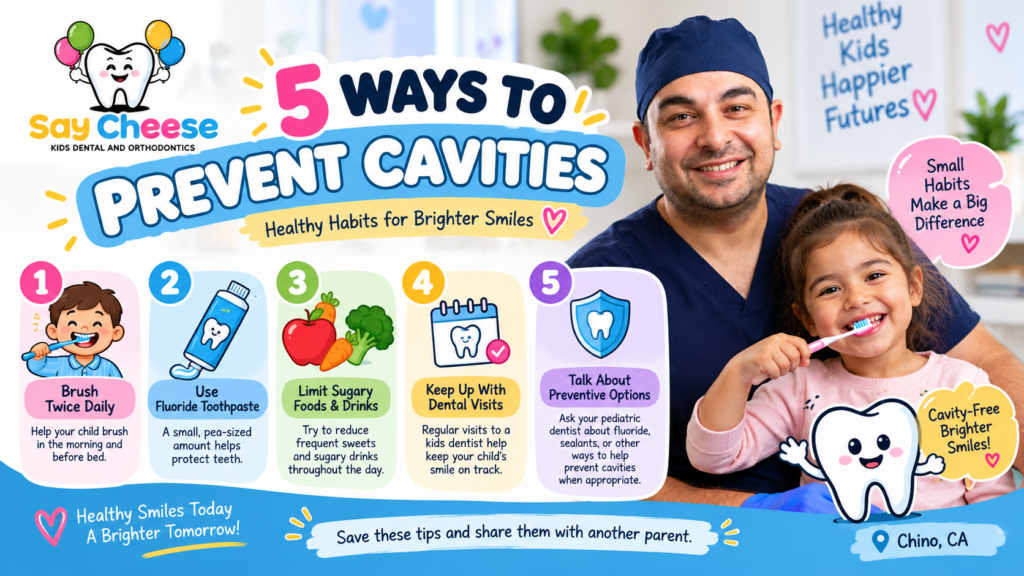
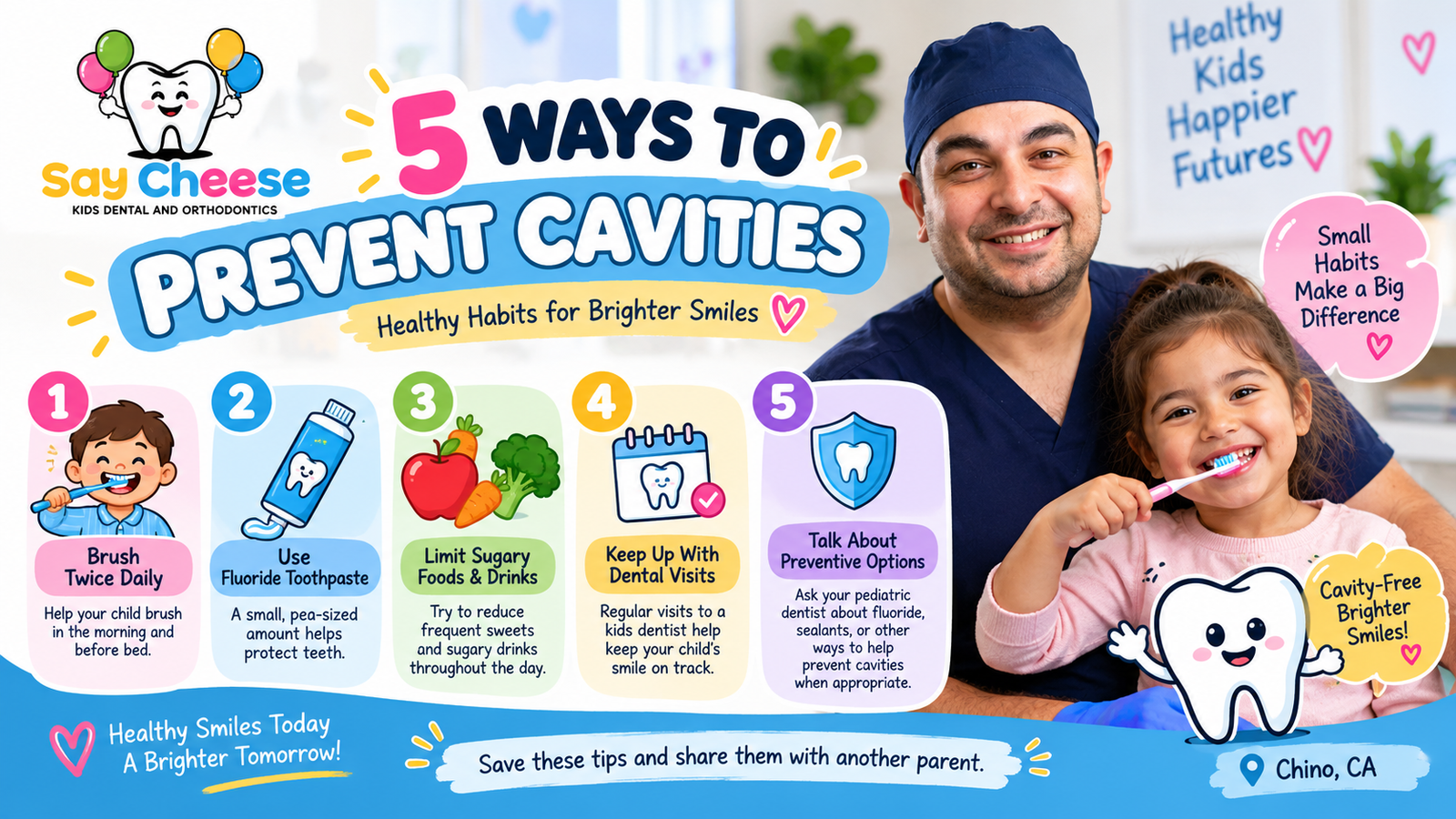
Five habits prevent most childhood cavities: brush twice daily with fluoride toothpaste, use the right amount for your child’s age, limit how often sugary food and drink appear rather than how much, keep six-monthly dental visits, and ask about sealants and fluoride. Frequency of snacking matters more than quantity — six small snacks cause more damage than one dessert.
1. Brush Twice Daily — and Help Until Age Seven
Morning and before bed, every day. The bedtime brush matters most, because saliva flow drops during sleep and whatever is left on the teeth sits there for hours.
Children do not have the manual dexterity to brush thoroughly until around age seven or eight. Before that, an adult should brush or at least go over the back teeth afterwards. If your child insists on doing it themselves, let them start and you finish.
2. Use Fluoride Toothpaste — the Right Amount
Fluoride helps enamel rebuild after acid attacks. Amount matters:
- Under age 3 — a smear about the size of a grain of rice
- Age 3 and over — a pea-sized amount
- Encourage spitting rather than rinsing, so a little fluoride stays on the teeth
3. Limit How Often Sugar Appears
This is the one that changes outcomes most, and the one most parents have not been told.
Every time sugar or starch reaches the teeth, an acid attack begins and lasts roughly 20 minutes. A juice box sipped over an hour keeps the mouth acidic the whole time. The same juice finished in five minutes causes one short attack.
- Keep sweets with meals rather than between them
- Water between meals — it rinses and feeds nothing
- No bottles of milk or juice at bedtime
- Watch sticky foods — gummies and dried fruit cling to grooves far longer than chocolate
- Remember crackers and crisps count — starches break down into sugars
4. Keep Six-Monthly Visits
Early decay causes no pain and is often invisible — particularly between teeth that touch. By the time a child complains, it is usually well advanced.
Routine exams catch it while it can still be managed simply, sometimes with fluoride alone rather than a filling. Some children need more frequent visits based on individual risk.
5. Ask About Sealants and Fluoride
Most childhood cavities start in the grooves of the back teeth — grooves narrower than a toothbrush bristle. Sealants fill them with a protective coating, take minutes, and need no drilling. Usually placed around ages six and twelve.
Professional fluoride varnish is quick and suits children who cannot manage longer appointments. Both are covered under preventive care, and by Medi-Cal for eligible children.
Common Questions
At what age should I start brushing my child’s teeth?
As soon as the first tooth appears, usually around six months. Before that, wipe the gums with a clean damp cloth.
How long should my child brush for?
Two minutes, twice a day. Most children brush for far less — a timer or a two-minute song helps.
Is fluoride safe for children?
Yes, in age-appropriate amounts. The rice-grain and pea-sized guidance exists precisely to keep intake correct while children are still learning to spit.
When should my child start flossing?
As soon as any two teeth touch. Decay between touching teeth cannot be reached by a brush and is invisible until it is large.
Are sealants worth it?
For most children, yes. They protect the surfaces where the majority of childhood cavities begin, and they are quick and painless to place.
Does my child need fluoride if our water is fluoridated?
Often still yes. Water fluoridation helps, but topical fluoride from toothpaste and varnish works directly on the enamel surface. We assess individual risk.
What snacks are best for teeth?
Cheese, plain yoghurt, vegetables, nuts for older children, and water. See which foods build strong teeth.
My child already has cavities. Is prevention still worth it?
Very much so. Preventing the next one is always easier than treating it, and children who have had cavities are at higher risk of more.
Final Thoughts
None of these require a great deal of effort — they require consistency. If you change one thing, make it the snacking frequency. It is the lever most parents do not know they have.
For a personalised prevention plan, call (909) 479-6030 or request an appointment.
