Kids braces can help correct crowded teeth, bite issues, and crooked smiles while supporting healthy jaw development. At Say Cheese Kids Dental & Orthodontics in Chino, we provide personalized orthodontic care for children in a friendly, stress-free environment. During your consultation, we’ll explain your child’s treatment options, recommended timing, and insurance coverage—so you can make an informed decision with confidence.
5.0 on Google
Read our reviews
5+ years
caring for Chino kids
Medi-Cal & PPO
plans accepted
Se habla
español
Kids braces are orthodontic appliances — brackets bonded to the teeth and connected by a wire — that gradually move a child’s teeth into proper alignment. At Say Cheese Kids Dental & Orthodontics in Chino, CA, most children begin braces between ages 9 and 14 and wear them for 12 to 24 months. Consultations are free, and Medi-Cal and most PPO plans are accepted.
Most parents notice something before a dentist ever says the word “braces” — teeth that overlap, a bite that looks off, or a smile that’s changed shape as the adult teeth come in. Here’s what we look for during an orthodontic evaluation.
Adult teeth arriving with nowhere to go
Spacing that doesn’t close as more teeth come in
Upper teeth covering too much of the lower, or the lower jaw sitting forward
Food that has to be worked around
Habits that shape the developing jaw
Both can throw off the eruption sequence
If you’re seeing two or more of these, an evaluation is worth booking. Not every child on this list needs braces right away — but every child on this list needs someone to look.
The American Association of Orthodontists recommends every child have a first orthodontic evaluation by age 7. That doesn’t mean braces at 7 — it means someone qualified takes a look while the jaw is still growing and problems are still easy to redirect.
Adult molars and front teeth have arrived. We can spot crossbites, severe crowding, and jaw-growth issues early, when a small intervention now prevents a large one later. Most kids at this age need nothing but a follow-up in twelve months.
A smaller number of children benefit from early treatment: an expander to widen a narrow arch, a space maintainer to hold a gap, or partial braces on the front teeth. Phase 1 typically runs 9 to 12 months and is followed by a resting period.
Most permanent teeth are in, the jaw is still growing, and teeth move efficiently. This is when the majority of our braces patients start.
Teens do well in braces. Treatment may take slightly longer than at 12, and clear ceramic braces or Invisalign Teen are often preferred at this age.
Worried you’re late?
You’re almost certainly not. Braces work at every age — the only thing that changes with time is how much of the correction comes from guiding growth versus moving teeth.
We fit the appliance to the child — their bite, their age, their activities, and honestly, how they feel about how it looks.
Neither is universally better. The right answer depends almost entirely on how complex the correction is and how reliably your child will follow instructions.
| Traditional braces | Invisalign Teen | |
|---|---|---|
| Best for | Complex crowding, bite correction, younger kids | Mild-to-moderate crowding, motivated teens |
| Compliance needed | None — they’re bonded on | High — 20–22 hours daily |
| Appearance | Visible (metal) or subtle (ceramic) | Nearly invisible |
| Eating | Some foods off-limits | Remove and eat anything |
| Cleaning | Takes more effort | Remove, brush normally |
| Sports | Mouthguard over braces | Remove for contact sports |
| Typical cost | Lower | Somewhat higher |
| Visit frequency | Every 4–8 weeks | Every 6–10 weeks |
Our honest position: for children under 12, and for any case involving significant bite correction, braces are usually the better clinical choice. For a self-motivated 14-year-old with moderate crowding, aligners work beautifully. We’d rather place braces that finish on schedule than aligners that sit in a backpack.
Crowded and overlapping teeth trap plaque in places a toothbrush can’t reach. Straightening them makes daily brushing and flossing actually effective.
Proper alignment distributes chewing force evenly and reduces uneven enamel wear, jaw strain, and the tooth fractures that come from a bad bite years down the line.
Some alignment problems — open bites in particular — affect how a child forms certain sounds. Correcting the bite often improves articulation.
Teeth that stick forward are far more vulnerable during a fall or a collision on the field. Bringing them into the arch protects them.
In a growing mouth, guiding what’s already erupted makes space for what’s next — and can prevent an impacted canine or an extraction later.
Kids notice their smiles somewhere around fifth grade, and they notice each other’s. Parents tell us the change shows up long before treatment ends.
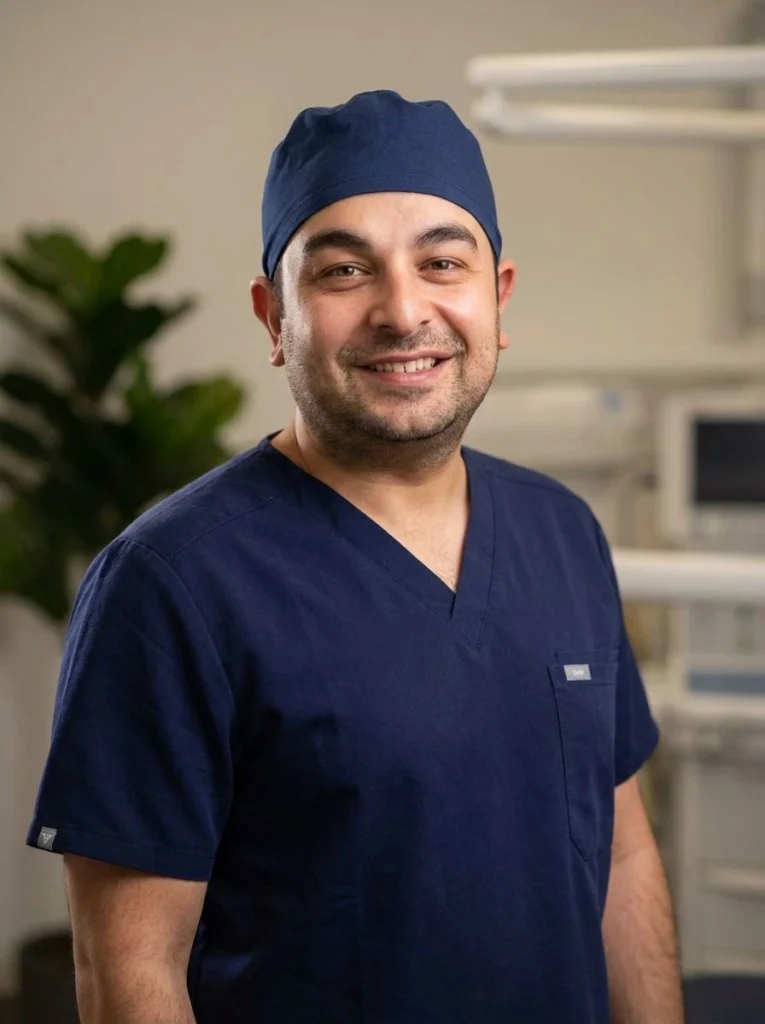
Dr. Kohan examines your child’s teeth, bite, and jaw development, and takes digital images and X-rays as needed. You’ll leave knowing whether your child needs braces, whether now is the right time, what the treatment would involve, and what it would cost. No deposit, no obligation.
If you decide to move forward, we take full diagnostic records — panoramic X-ray, photos, and a digital scan of the teeth. Dr. Kohan builds a plan around your child’s specific bite and reviews it with you before anything is placed.
Teeth are cleaned and prepared, brackets are bonded, and the archwire is fitted. It’s a long-ish appointment but not an uncomfortable one — there are no shots and no drilling. Your child picks their band colours at the end.
The wire is changed or tightened to keep the teeth moving on schedule. These are quick, routine visits. We schedule them after 3:00 PM whenever we can, so your child isn’t pulled out of class.
Brackets come off, adhesive is polished away, and we take final photos. Kids remember this appointment for a long time. So do parents.
A retainer holds the new alignment while the bone stabilises around the teeth. Full-time at first, then nights only. This step is not optional — teeth drift back without it, and retention is how the whole investment holds.
Total treatment time: most children finish in 12 to 24 months, depending on the correction needed and how consistently instructions are followed.
Not the way parents expect. Placing braces involves no needles, no drilling, and no numbing — most kids describe it as boring rather than painful.
What your child will feel is pressure and general soreness for two to four days after the braces go on, and for about a day after each adjustment. It’s a dull ache from teeth beginning to move, not sharp pain. Here’s what helps:
If a wire is poking or a bracket comes loose, call us at (909) 479-6030. Most of these are five-minute fixes and we don’t make you wait a month for the next scheduled visit. Outside office hours, cover the spot with wax and call in the morning — or see our emergency kids dentist in Chino page if your child is in real pain.
Most families want this number before anything else, so here it is plainly.
Every child’s bite is different, so there is no single price for braces — what your family pays depends on how much correction is needed and which appliance is used. What we can promise is that you get the number in writing at the free consultation, itemised and explained, before you have committed to anything.
| Treatment | Typical duration | Usually suited to |
|---|---|---|
| Phase 1 (early / interceptive) | 9–12 months | Ages 8–11 with a crossbite, narrow arch, or severe crowding |
| Traditional metal braces | 18–24 months | Most children; every type of correction |
| Clear ceramic braces | 18–30 months | Older children and teens who want a subtler look |
| Invisalign Teen | 12–24 months | Motivated teens with mild-to-moderate crowding |
| Retainers | Ongoing after treatment | Every patient, to hold the result |
What moves the number up or down: how much movement is required, whether one phase or two is needed, which appliance is chosen, treatment length, and how much your insurance plan contributes.
You get a written treatment estimate at the consultation that itemises the total, the insurance portion, and your monthly amount. We don’t add fees mid-treatment for routine adjustments, repairs, or retainer checks.
Getting quality pediatric dental care in Chino shouldn’t be complicated. Say Cheese Kids Dental & Orthodontics proudly accepts Medi-Cal (Denti-Cal) and most major PPO dental insurance plans to help families access affordable dental care for children.
Dr. Joshua Kohan brings a compassionate, engaging, and deeply individualised approach to pediatric dentistry. As a trusted kids dentist in Chino, he is dedicated to helping children feel comfortable, confident, and excited about their dental care.
Born and raised in California, Dr. Kohan completed his undergraduate studies at UCLA and earned his Doctor of Dental Medicine (D.M.D.) degree from Nova Southeastern University College of Dental Medicine, graduating among the top of his class. Over the past five years he has served as a lead pediatric dentist, caring for thousands of children.
Dr. Kohan treats children exclusively, which changes how a visit goes. He explains what he’s doing in language a nine-year-old understands, he works at a pace the child sets, and he tells parents the truth about whether treatment is needed — including when it isn’t.
As a father of two, Dr. Kohan understands how to connect with children on their level — easing anxiety, building trust, and creating positive dental experiences for families throughout Chino and nearby communities.
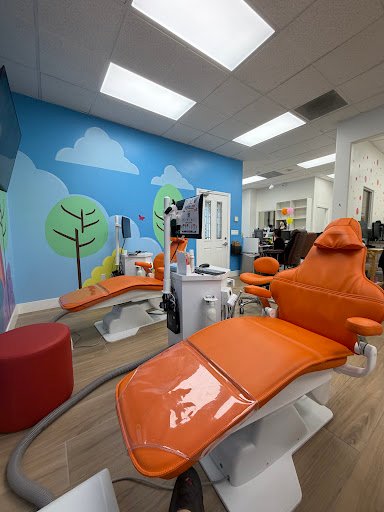
Every chair, every explanation, and every appointment length is built around children. Your child isn’t a small adult squeezed into an adult practice’s schedule.
Cleanings, fillings, sealants, and braces in the same office, with the same team, in the same file. You’re not driving to one place for teeth and another for alignment.
Adjustment appointments after 3:00 PM whenever the schedule allows, so your child isn’t missing class every six weeks.
If your child isn’t ready for braces, we’ll tell you to come back in a year rather than starting treatment that doesn’t need starting yet.
Low-radiation digital X-rays and panoramic imaging give Dr. Kohan a complete view of erupting teeth, roots, and jaw structure — with a fraction of the exposure of traditional film.
Where scans are needed, a digital scanner replaces the gag-inducing impression tray most parents remember from their own childhood.
Full instrument sterilisation and infection-control procedures that meet CDC and California Dental Board standards, every single time.
Every adjustment visit includes a check on oral hygiene, bracket integrity, and whether treatment is tracking on schedule.
Hard candy · ice · popcorn kernels · nuts · caramel and taffy · chewing gum · whole apples and carrots (cut them into pieces) · corn on the cob (cut it off the cob) · beef jerky · hard crusty bread. Anything that could snap a bracket or bend a wire.
Pasta · rice · soft bread · eggs · yogurt · smoothies · soup · bananas · cooked vegetables · soft cheese · ground meats · pancakes · ice cream. The list of what’s allowed is much longer than the list of what isn’t.
Brushing and flossing with braces. Brush after every meal, angling the brush at the gumline and then at the brackets. Use an interdental brush to clean under the wire. A floss threader or a water flosser makes flossing realistic for a kid rather than theoretical. Fluoride toothpaste, always — decalcification around brackets is the single most common preventable problem in orthodontics, and it’s entirely avoidable with consistent brushing.
Keep regular cleanings and preventive visits on schedule during treatment. Braces make plaque harder to remove, which makes professional cleanings more important, not less.
Sports and activities. An orthodontic mouthguard over the braces for any contact sport — football, basketball, soccer, martial arts. We can fit one. Wind instruments take a few weeks to adjust to; band kids figure it out.
School and daily life. Your child may talk a little differently for a few days. Adjustment visits take about 25 minutes. Most kids are back to completely normal within a week of getting braces on, and by month two they’ve forgotten they’re wearing them.

Very clean office the staff was amazing. So many neat video games. I would refer Say Cheese Dental to my friends and family.
The dentist was very kind and knowledgeable and polite! The staff took the time needed for my 3 boys to feel comfortable and relaxed. We will be here in the next 6.months for there followup and braces!
Me encanto el trato del personal todos incluyendo al doctor
Muy amable todo el personal y atentos, respondieron todas mis dudas. Fue una buena opción venir aquí.
This was my first visit to Say Cheese Dental, and I was really impressed. The place is super clean, organized, and has a relaxing atmosphere. The staff is kind, patient, and very friendly — they made me feel comfortable from the moment I walked in. I’m happy I chose this office!
Great consultation! The staff was friendly, the orthodontist was knowledgeable and took the time to explain everything clearly. I felt comfortable and confident with the treatment plan. Highly recommend! I will definitely be back!
First time coming to this kids dental and we had a great experience. Everything was explained so well , will be coming back!
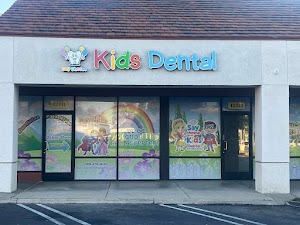
Our office sits on Central Avenue in Chino, and families come to us from across the Chino Valley and the western Inland Empire.
Chino — We’re minutes from most Chino neighbourhoods and from the Chino Valley Unified schools, which makes after-school adjustment visits easy to fit in.
Chino Hills — A short drive up Central Avenue. Chino Hills families make up a large share of our orthodontic patients, and many tell us the drive is shorter than the wait at a larger practice.
Eastvale — Roughly fifteen minutes east. We schedule Eastvale families in later afternoon blocks so the trip lines up with the end of the school day.
Ontario, Norco, Mira Loma, Corona, Diamond Bar, Walnut, Pomona, Upland, and Anaheim Hills — we treat children from all of these communities and are happy to arrange appointment times that fit a commute.
Say Cheese Kids Dental & Orthodontics
12413 Central Ave, Chino, CA 91710
(909) 479-6030
Mon–Thu 8:00 AM–5:00 PM · Fri 8:00 AM–2:00 PM
Children’s dentist in Chino · Children’s dentist near Chino Hills
The American Association of Orthodontists recommends a first orthodontic evaluation by age 7. At that age the first adult molars and incisors have usually erupted, which lets us spot crossbites, crowding, and jaw-growth issues while they’re still simple to guide. Most 7-year-olds need nothing more than a follow-up visit a year later.
There is no single price, because cost depends on how much correction your child needs and which type of braces is used. You receive a written estimate at your free consultation showing the total, the insurance portion, and your monthly payment — before you commit to treatment. We accept Medi-Cal, most major PPO plans, and CareCredit financing.
Medi-Cal Dental (Denti-Cal) covers orthodontic treatment for children who meet California’s medical-necessity criteria, which are scored on the severity of the bite problem. We accept Medi-Cal, handle the qualifying evaluation, and will tell you upfront whether your child is likely to qualify.
Most children wear braces for 12 to 24 months. The exact length depends on how much movement is needed, whether the bite requires correction as well as the teeth, and how consistently your child follows instructions about elastics and care.
Placing braces doesn’t hurt — there are no needles and no drilling. Children typically feel pressure and general soreness for two to four days afterward, and for about a day after each adjustment. Soft foods and children’s pain reliever handle it comfortably.
Possibly not. A small number of 8-year-olds benefit from Phase 1 treatment for a crossbite, a narrow arch, or severe crowding. Most do better with a monitoring visit and full braces at 11 to 13. An evaluation is the only way to know which group your child is in.
No. Teenagers respond very well to orthodontic treatment. Treatment at 15 may take slightly longer than at 12 because less correction can come from natural jaw growth, but the results are excellent — and ceramic braces or Invisalign Teen are popular at this age.
Adjustment visits are scheduled every 4 to 8 weeks and take about 20 to 30 minutes. We book after 3:00 PM whenever possible so your child doesn’t miss school.
Avoid hard candy, ice, popcorn, nuts, caramel, taffy, gum, jerky, and hard crusty bread. Whole apples, carrots, and corn on the cob are fine if cut into pieces. Nearly everything else is allowed.
Call us at (909) 479-6030 — most bracket and wire problems are quick fixes and we’ll see your child before the next scheduled adjustment. Outside office hours, cover the spot with orthodontic wax and call in the morning.
Slightly, and only briefly. Some children lisp for a few days as the tongue adjusts to the brackets. Speech returns to normal within about a week, and braces often improve articulation long-term by correcting an open bite or a severe overbite.
Yes. Your child should wear an orthodontic mouthguard, which fits over braces and protects both the appliance and the lips. We can fit one. Football, basketball, soccer, and martial arts are all fine with proper protection.
Braces are bonded on and work continuously, which makes them better for complex corrections and for younger children. Invisalign Teen uses removable trays that must be worn 20 to 22 hours a day, which suits motivated teens with mild-to-moderate crowding.
Yes, always. Teeth naturally drift back toward their original position while the bone stabilises after treatment. Your child wears a retainer full-time at first, then at night. Skipping retention is the most common reason results are lost.
Braces do trap more plaque, so brushing takes more attention. Your child should brush after every meal and use an interdental brush under the wire, plus a floss threader or water flosser. Consistent cleaning prevents the white marks that can appear around brackets.
Yes. Treatment can be spread into monthly payments across the length of treatment, with low or no down payment options for qualifying families. Insurance is applied first, so your monthly figure reflects what you actually owe.
Yes. The consultation includes an examination, imaging as needed, a recommendation, and a written cost estimate, at no charge and with no obligation to begin treatment. If your child isn’t ready for braces, we’ll tell you to come back in a year.
Yes. Our office is on Central Avenue in Chino, a short drive from Chino Hills and about fifteen minutes from Eastvale. We also treat children from Ontario, Norco, Corona, Mira Loma, Diamond Bar, Walnut, Pomona, and Upland.
Sometimes. Partial or Phase 1 braces can be placed during the mixed-dentition stage when there’s a specific problem to correct early. Full braces usually wait until most permanent teeth have erupted, generally between ages 11 and 13.
The only reliable way is an orthodontic evaluation. Crowding, gaps, a bite that doesn’t meet evenly, difficulty chewing, or early or late loss of baby teeth are all reasons to book. At the consultation you’ll get a straight answer — including “not yet” if that’s the right one.
Medically reviewed by Dr. Joshua Kohan, DMD — D.M.D., Nova Southeastern University College of Dental Medicine, Say Cheese Kids Dental & Orthodontics, Chino, CA.
Last reviewed: 31 July 2026. This page is for general information and is not a substitute for an in-person examination.
Bring your child in for a free braces consultation. In about 45 minutes, Dr. Kohan will examine your child’s teeth and bite, explain what he sees in plain language, and tell you honestly whether treatment makes sense now, later, or not at all. You’ll leave with a written estimate and no obligation.
Call (909) 479-6030 or book online. We’ll find a time that works around school.
12413 Central Ave, Chino, CA 91710 · Medi-Cal & most PPO plans accepted · Se habla español