When decay has taken too much of a baby tooth, a filling has nothing solid left to hold onto and tends to fail. A crown caps the whole tooth instead, restoring strength and keeping it in place until it falls out naturally. We recommend one only when a filling genuinely would not last.
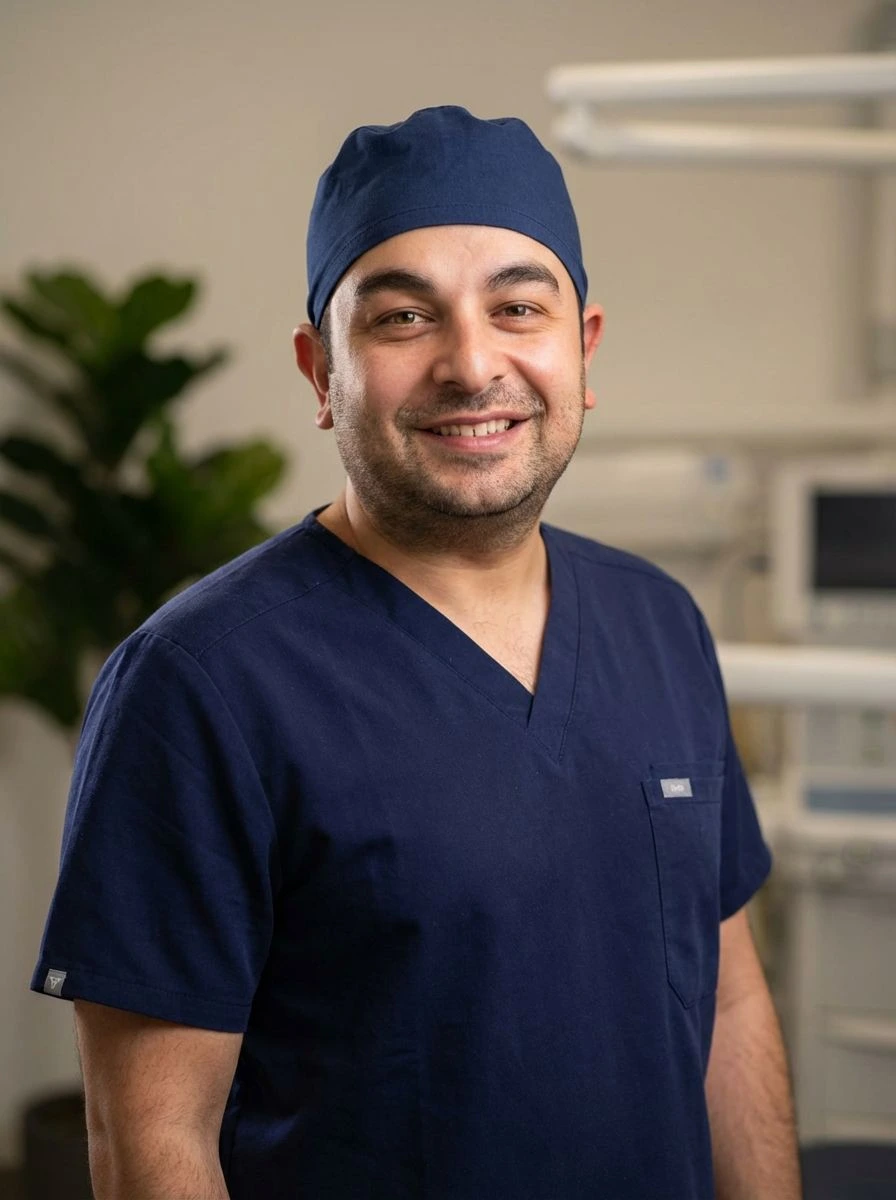
UCLA-trained, with over five years of experience caring for children’s smiles in Chino.

Once decay reaches across several surfaces of a tooth, there is not enough healthy structure left to anchor a filling. Fillings placed in these teeth commonly chip or fall out within months. A crown covers the tooth entirely, which is why it holds where a filling would not.
A tooth fractured by a fall or a hard bite may be structurally weak even where decay is not the issue. Capping it restores enough strength for normal chewing. If the break happened suddenly, see our emergency dental care.
When decay reaches the nerve, the infected pulp is removed and the tooth is medicated — a pulpotomy, sometimes called a baby root canal. That leaves the tooth more brittle, so a crown is almost always placed afterwards to stop it splitting.
A crowned baby tooth holds its place in the arch until it is due to come out. That matters, because losing a back baby tooth early lets neighbouring teeth drift, which can require a space maintainer and complicate the permanent teeth coming through.
Both restore a decayed tooth. Which one suits your child depends almost entirely on how much healthy tooth is left to work with.
| Tooth-coloured filling | Baby tooth crown | |
|---|---|---|
| Best suited to | Small to moderate cavities on one or two surfaces | Extensive decay, or decay across three or more surfaces |
| Tooth structure | Preserves the natural tooth, only the decay is removed | Covers the whole tooth above the gumline |
| Strength | Adequate where surrounding tooth is sound | Considerably stronger, resists chewing forces |
| Typical use | Everyday cavity repair | Often after a pulpotomy, or on badly broken-down teeth |
| Appearance | Tooth-coloured, blends in | Silver stainless steel, or tooth-coloured zirconia where suitable |
| Chair time | Usually one shorter appointment | Usually one appointment, slightly longer |
| Longevity in a baby tooth | Good, but may fail early if the cavity was large | Very high success rate until the tooth is shed naturally |
The right choice depends on your child’s particular tooth, how far the decay has spread, and their overall oral health. Dr. Kohan will show you what he is seeing and explain why one option suits that tooth better than the other. A crown is never the default — where a filling will hold, a filling is the better answer.
We look at the tooth and usually take a digital X-ray to see how deep the decay runs and whether the nerve is involved. Then we explain what we found and what the options are, including doing nothing for now if that is reasonable.
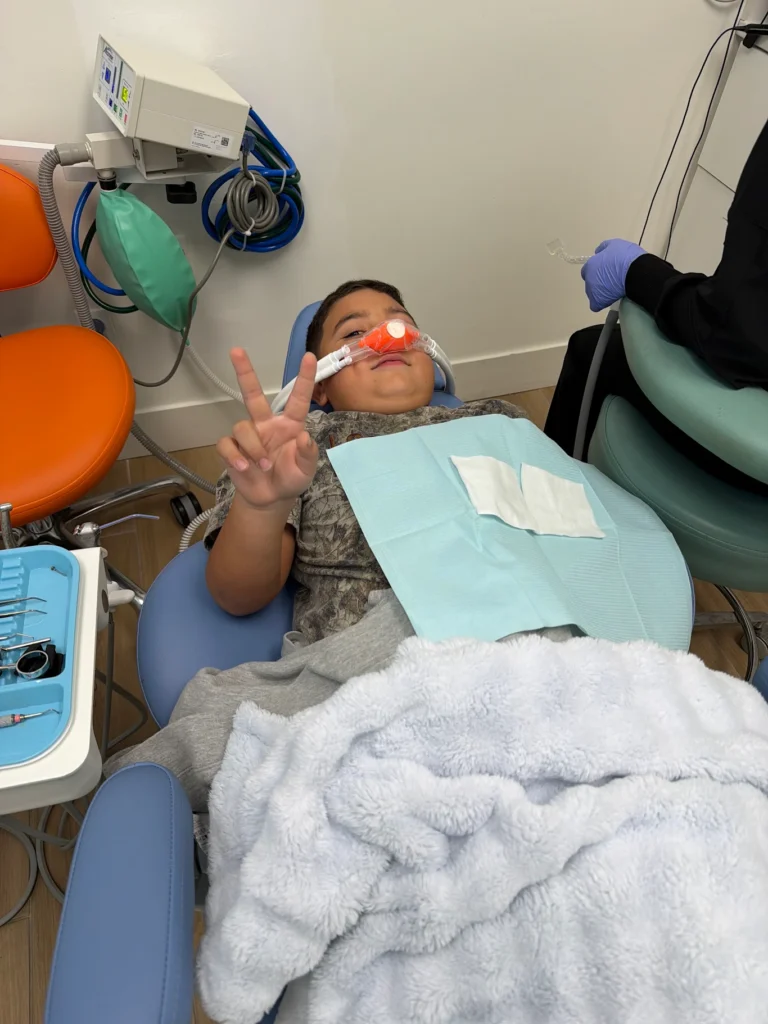
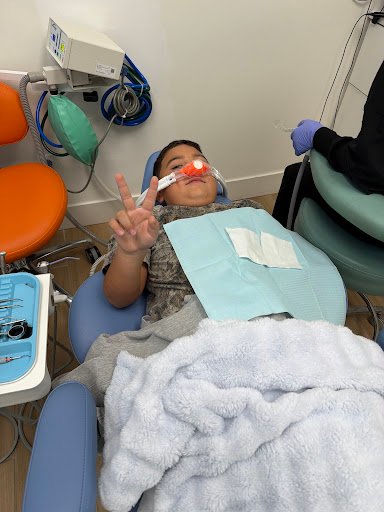
The area is numbed thoroughly before anything begins. Nitrous oxide is available for children who need it — see sedation options. Your child should not feel the treatment itself, though they will feel pressure and hear noise.
The decayed portion is removed and the tooth is shaped so the crown will seat properly. Healthy structure is preserved wherever it can be. If the nerve is involved, a pulpotomy is done at this point.
A pre-formed crown is sized to the tooth, adjusted, and cemented in place. There is no waiting period and no temporary crown — it is fitted and finished in the same appointment.
Your child bites together and we adjust until it feels level. Getting this right matters, because a high crown causes soreness. Tell us if it still feels odd once the numbness wears off.
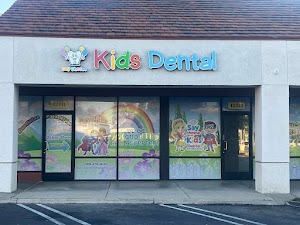
What a GREAT OFFICE ! The whole team is so welcoming and really makes you feel at ease ! My son was so so anxious about his visit and first time getting cavities filled and they really took their time and made him feel like he was safe and in such good hands. I really really appreciated it as a mom the extra attention to detail and attention to my son’s feelings. We will most definitely be coming back for future care and a huge thank you again to the team !
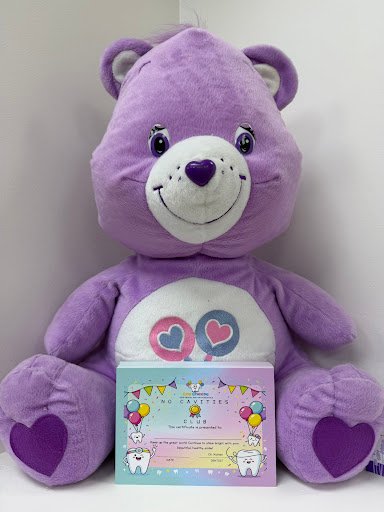

 MARTA OLCZYK
I brought my kids in to Say Cheese Dental today after moving from Orange County && they immediately eased my nerves. The staff was so nice and made my children very comfortable. We’re looking forward to coming back ❤️
 Gy'Kia Wills
Awesome service super friendly
 David Sanchez
This was our first visit, and we had a great experience. Everyone was very patient, friendly, and helpful. The staff made my kids feel comfortable and well cared for. We really appreciate their kindness and professionalism.
 Wendy W
The girls on the office were really sweet and kind with my daughter. The patience and professionalism was very exceptional. They explained everything very well and straight forward. I’ve been to other offices and was not treated the way I was treated today. The staff was very welcoming and attentive
 Adriana Cervantes
Great experience at this dental office. Everyone was kind and welcoming, from the front desk to the X-ray technician and the doctor. The dentist was very thorough. He took the time to explain everything clearly, and made sure I understood the treatment and options. You can really tell they care about their patients and want you to feel comfortable. I highly recommend them.
 Iris Avalos
I must say this play is Wonderfully very charming and kids friendly. They have a wonderful and knowledgeable Doctor, and their staff are professional. My daughter has alot of crowding, and in between baby and mature teeth phase and needs a braces, everyone was non judgemental about her teeth and treated her and myself with kindness. And after all that they have a prize for the kids. Definitely recommended this dentist office.
 Richelle T
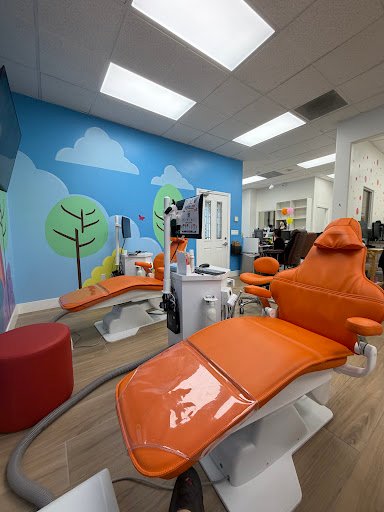
Dr. Kohan was super helpful, transparent and professional. The office is very nice and super kid friendly. Staff was attentive and kind. My girls felt very comfortable with the consultation and cleaning.
 Griselda Aguirre
Excelente Servicio Fueron súper amables y comprensivos y eso hizo que mi hijo se sintiera seguro… Lo recomiendo 10/10
 Brenda Orellana